

On Monday, 6 February 2023, a devastating 7.8 magnitude earthquake struck near the border of Türkiye and Syria, causing one of the worst disasters to hit the region in recent times. The earthquake killed tens of thousands of people and injured many more. Thousands of buildings collapsed, exposing countless people to harsh winter conditions. As the UN continues to work to assist millions of people every month, you can help by donating to the UN Crisis Relief or by supporting the UN agencies working on the relief efforts.
Humanitarian Aid

The World Food Programme (WFP) is joining calls for the international community to act as a surge in fighting displaces hundreds of thousands of people in camps in the east of the Democratic Republic of the Congo. As of 27 January, the escalation of violence had overwhelmed Goma, the largest city in the east. “Goma falling is the worst thing that we could possibly imagine happening in North Kivu,” said WFP Country Director for DRC, Peter Musoko. “It means we have an urban city centre with a lot of very frustrated and vulnerable people all looking for assistance..” WFP is monitoring the situation to deliver aid where possible. The aim is to reach 800,000 people in North Kivu, South Kivu, and Ituri – 5.1 million people were already displaced across the three eastern states before the current crisis. You can support WFP’s work by donating here.
In 2024, FAO, with support from partners, helped flood-affected communities in Logone Birni by building dykes, creating risk management plans, and providing monetary aid.

The conflict in Lebanon, which began on 8 October 2023, took a devastating turn as it escalated between September and November 2024, marking the darkest and most destructive period since the 2006 war - leaving no life untouched and no home unscarred. Entire areas were emptied as relentless Israeli bombardments and sweeping displacement orders forced hundreds of thousands of people to flee overnight. More than 1.2 million people - including humanitarians - were uprooted in South Lebanon, the Bekaa Valley, and Beirut’s southern suburbs, leaving behind lives, homes, and communities. For humanitarians, September 2024 became a turning point, marked by pain and courage. Despite being among the affected, they aided people in need. Some were killed alongside their families. Others were forced to leave their homes, haunted by fear and grief, mourning colleagues, friends, and loved ones.

Despite ongoing threats, Kharkiv, Ukraine is gradually recovering with international aid, as a project funded by Japan and implemented by United Nations Office for Project Services repairs homes, offering hope and stability to displaced residents.

2024 was catastrophic for the people we serve. Millions of lives were on the line as conflicts and unrest intensified in Haiti, Lebanon, the Occupied Palestinian Territory, Sudan and Ukraine. At the same time, millions more people endured the devastating effects of extreme weather – drought in Southern Africa, Hurricane Beryl in the Caribbean, and record-breaking floods in Asia and West Africa. Last year was also the deadliest year on record for humanitarian workers – 300 were killed. Despite the mounting challenges, aid workers reached nearly 116 million people with assistance this year. Here are 12 ways the UN Office for the Coordination of Humanitarian Affairs (OCHA) made a difference in 2024.

In 2024, United Nations Office for Project Services worked around the world with the UN family and partners to respond to critical needs and support vulnerable communities.
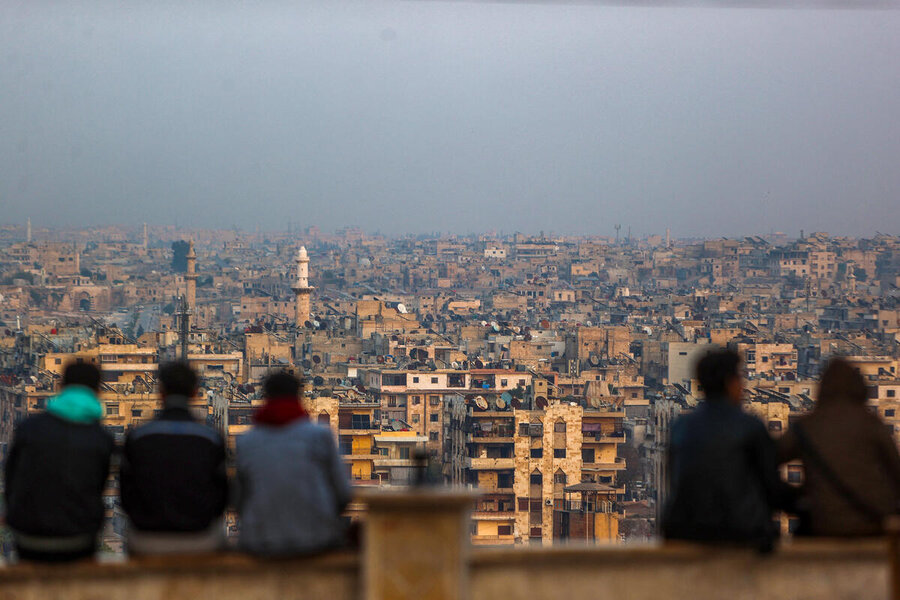
The World Food Programme is urgently seeking $250 million to support 2.8 million displaced and food-insecure people across Syria. Ongoing conflict has exacerbated the food security crisis, with 12.9 million Syrians affected by food insecurity. Disrupted supply routes, soaring food prices, and a weakening currency have deepened the crisis. While WFP has been providing critical food aid, additional funding is essential to continue these efforts and prevent further hardship in the region.

Across the globe, countless individuals endure the hardships of conflict, disaster, and displacement. Guided by mandates rooted in the UN Charter, the UN operates on multiple fronts—primarily through humanitarian workers—to address urgent needs. Humanitarian workers provide assistance wherever local capacity is overwhelmed. They ensure that families have their basic needs met, women and children receive support, and farmers can maintain their livelihoods. They mobilize resources swiftly, share critical information, and deliver timely, dignified assistance—the embodiment of global collaboration.

Your donation can provide urgent humanitarian aid, protect human rights, promote gender equality, and support sustainable development across the globe. By contributing, you help deliver food, shelter, healthcare, and education to vulnerable communities affected by conflict, poverty, and natural disasters. Every donation, big or small, drives meaningful change and empowers the most vulnerable. Join this global mission for peace, dignity, and equality. Learn how to support essential UN programmes by donating to the United Nations and its Specialized Agencies.

Nearly 50 mothers and their children are killed every day in Gaza, and aid has drastically decreased, raising fears of famine. Parents tell the United Nations Population Fund (UNFPA) of their urgent need to give birth safely, find food, and keep their children warm amid ongoing violence. Jawaher went into labor while fleeing violence in Gaza City, enduring two days before reaching a hospital to give birth safely. With 80% of Gaza facing evacuation orders and 130 births expected daily, her situation is increasingly common. UN efforts to deliver aid have been severely hindered. Despite UNFPA's commitment to women and girls, essential aid is at its lowest level in 11 months, leaving many Palestinians without basic necessities.

A World Food Programme convoy recently reached North Darfur’s Zamzam camp, delivering food to 12,500 people amidst dangerous terrain and conflict.

Humanitarian needs worldwide continue to grow as crises become more severe and complex. As we witness widespread conflicts and violations of international humanitarian law that continue to devastate civilian lives, and as the global climate crisis escalates, humanitarian organizations are faced with difficult decisions about who to prioritize for assistance. The Global Humanitarian Overview 2025, launched in Geneva, Kuwait City and Nairobi, provides insight into current and future needs and highlights the importance of empowering those affected by crises. Follow our live coverage on UN News.

In every corner of the world, volunteers are usually the first to respond. They rise to meet challenges such as climate change, conflicts, and social injustices with courage, dedication, and selflessness. To mark this year’s International Volunteer Day (5 December), Toily Kurbanov, the Executive Coordinator of the United Nations Volunteers programme, calls for greater focus on neglected aspects of volunteering. In an op-ed, Kurbanov highlights online volunteers as a key digital powerhouse for the UN, working remotely to drive progress in peace, humanitarian aid, and sustainable development.

Win Hla (name changed), a 58-year-old woman from Myanmar, was forced to flee her home with her family due to escalating conflict between the military and armed groups since 2021. Her journey to safety was perilous, and she now lives in a Buddhist monastery, grappling with fear and uncertainty for the future. Like Win, millions have been displaced, facing a deepening humanitarian crisis, with 18.6 million people in need of aid. Limited resources hinder the response, leaving many without adequate support. Despite their struggles, displaced individuals like Win and others hold onto hope and resilience, calling for urgent international action and funding.