FAO

An estimated 673 million people face hunger, while obesity and food waste reveal deep imbalances in the global agrifood system which are under growing strain from conflict, climate change, economic shocks, and inequality. Transforming these systems to be more sustainable, equitable, and resilient requires urgent, collaborative action across borders, sectors, and generations.

Together we can create a better, more sustainable food future for all. Make World Food DayYOUR day

A woman working with cocoa beans outdoors.

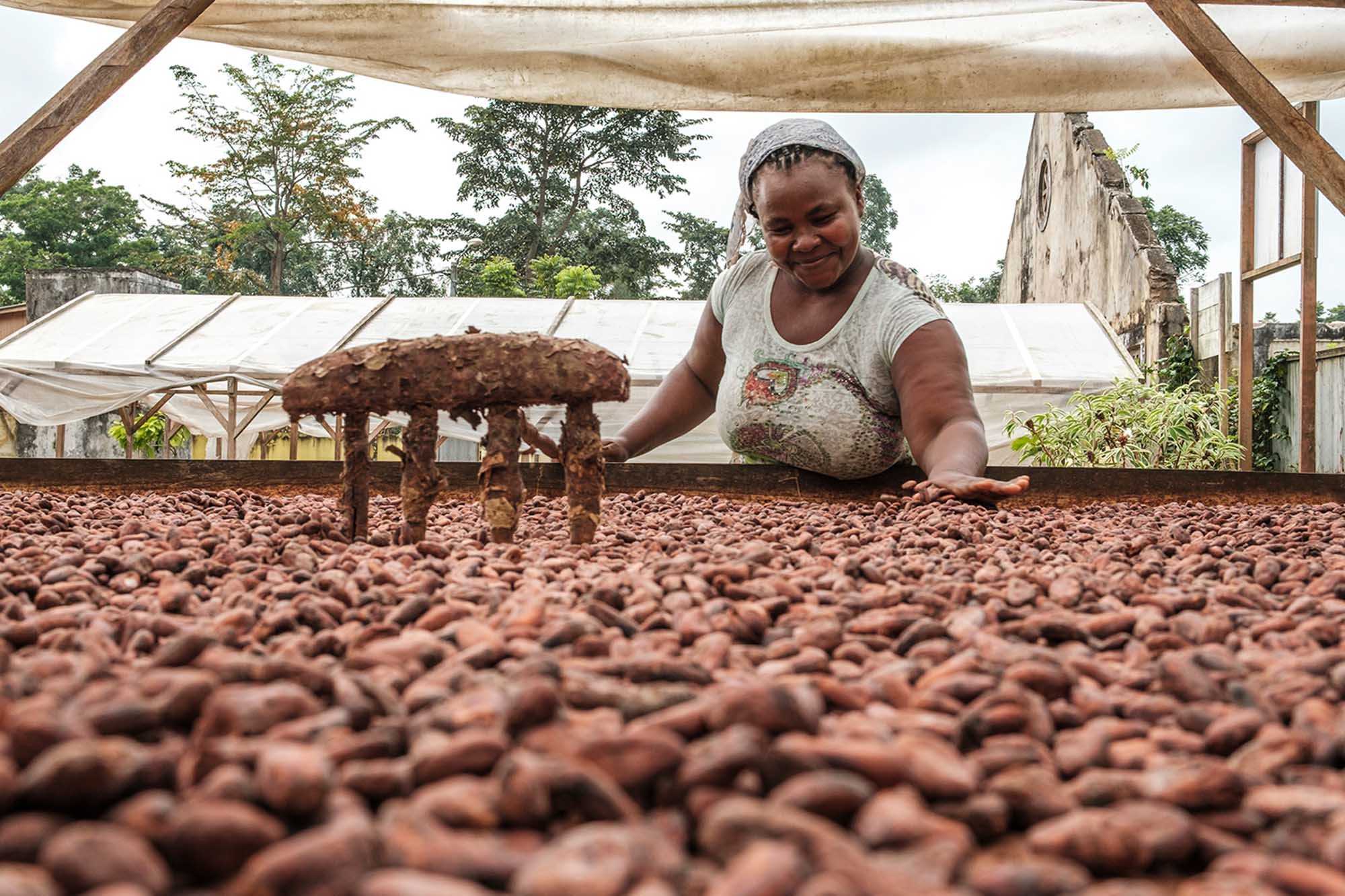
Morning light shines on Praia das Conchas Roça in São Tomé as Camila Varela De Carvalho, a 32-year-old cocoa farmer, sends her eight children to school before heading to her farm. With a harvesting tool, she collects ripe cocoa pods, crucial for her family's income. Camila, who also works at the Organic Cocoa Production and Export Cooperative (CECAB), helps improve local livelihoods through sustainable cocoa practices. Supported by the United Nations Food and Agricultural Organization (FAO) and funded by the Global Environment Facility (GEF), CECAB has become the largest cooperative in São Tomé, benefiting over 2,000 families and enabling Camila to cover living expenses and her children's education.

A rustic kitchen scene featuring a woman standing at a wooden counter and facing away from the camera towards a lush green forest.

The Food and Agriculture Organization of the United Nations (FAO), with the Green Climate Fund (GCF) funding, are implementing native forest conservation projects which include generating livelihoods and preserving ancestral traditions of rural communities in Argentina, Colombia, and Chile. Don't miss the opportunity to see the impact of these efforts, check out the photo story!

A woman stands in a Cambodian rice paddy.

After her mother passed, Seuy Phok managed her fields alone while raising her child. For over four decades, she harvested rice using traditional methods in northwestern Cambodia. However, unpredictable rains in recent years have made farming challenging, leading to crop damage. Four years ago, heavy rainfall devastated her rice fields. Seuy then joined the "Promoting Climate-Resilient Livelihoods in Rice-based Communities" project by the FAO, which provided her with high-quality seeds and sustainable farming training. As a result, her yields doubled, allowing her to sell both rice and seeds.

Two farm workers in an open field.

As rising global temperatures push heat stress to dangerous new levels, especially for outdoor workers, understanding its symptoms, risks, and prevention strategies is vital to protecting your health and saving lives.

A person sorting a large pile of potatoes.

In a remote town in Lesotho’s Maseru District, farmer Mabitsoane Diholo has transformed her life through potato farming. Once merely for family consumption, potatoes have become her livelihood, contributing to her home and children's education. In 2022, Lesotho joined the One Country One Priority Product (OCOP) initiative by the Food and Agriculture Organization of the United Nations (FAO), supporting 750 farmers like Mabitsoane. With improved seeds and access to markets like Maluti Fresh Produce Market, farmers are shifting from subsistence to commercial farming, enhancing their incomes and becoming entrepreneurs, thanks to better practices and coordinated efforts.

Unleash your creativity in the World Food Day Poster Contest and show how healthy food builds thriving, hopeful communities. The deadline for entries is 7 November 2025.

A group of women wearing blue aprons gathering around a table where there are several jars of pickled vegetables, including carrots and green peppers arranged in two rows.

In Jabal Saraj, Afghanistan, Hasina and 19 other women have found a livelihood by producing jams and pickles. With support from the FAO's Household Food and Livelihood Security project, funded by Luxembourg, they gather to peel, dice, and package fresh produce. Previously housewives facing financial struggles, they now earn an income, allowing them to provide essentials for their families, such as food, clothes, and school fees. The project equipped them with training and resources for processing and marketing their products, empowering these women to improve their lives and stand on their own feet.

A close-up of a pile of madd fruit in different stages of ripeness.

For generations, communities in Senegal’s Casamance region have harvested wild madd fruit, prized for its richness in vitamins and antioxidants. Traditionally collected by youth and often found in the "Sacred Woods," madd is deeply tied to local customs. Despite its cultural significance, producers have faced challenges ranging from limited control over pricing to unsustainable harvesting, over-exploitation, and forest fires. However, on June 25, 2024, madd became the first Senegalese product registered as a Geographical Indication (GI), ensuring protection of its name and quality. This initiative promotes sustainable practices and strengthens local economies by keeping production and income within the community.

Two individuals in a crop field holding large bundles of freshly harvested plants.

Paulo Benedito, a lifelong fisherman from Quissanga, a small coastal town in northern Mozambique’s Cabo Delgado province, faced devastating changes in 2021 when armed Islamist insurgents attacked his community, forcing him and his family to flee. They sought refuge at the Meculane Centre for Internally Displaced Persons, where Paulo had to transition from fishing to farming. Despite the challenges, he embraced agricultural training offered by the Food and Agriculture Organization (FAO). He soon excelled in his new role, expressing a newfound preference for farming over fishing, as it provided more stability and ensured food for his family.

Two individuals standing in a field of crops holding and examining plants.

In Zemo Alvani, Georgia, Natia Matcharashvili, a first-generation farmer, handpicks wheat grains from her fields. She and her husband, Shota, returned from Tbilisi to live closer to nature for their children and to revive native wheat varieties that are vanishing. They feel a responsibility to preserve these traditional strains that have adapted to their local soil and climate. By cultivating these heirloom varieties for their bakery, they aim to share their heritage with customers. What began as a simple passion has turned into a commitment to rediscover and rejuvenate forgotten Georgian wheat varieties.

mangroves

Where land and sea meet, a unique ecosystem is found: mangrove forests. Whether offering protection from climate change, supporting livelihoods, biodiversity and more, mangroves benefit us all. In the first study of its kind, FAO, with experts around the world, uncovered a wealth of information on the extent of mangrove forests globally, as well a glimpse into what causes mangrove losses and gains. Find out more about this precious ecosystem and see how mangroves affect our daily lives.

fishermen dragging anchor device

The FAO and Mozambique's fisheries ministry piloted eight anchored fish‑aggregating devices (aFADs) in Cabo Delgado to help small-scale fishers access offshore tuna. Made from sustainable materials like coconut fronds, these buoyed devices attract microorganisms, small fish, and larger species, offering predictable fishing spots. Training and gear provision helped fishers like Mário Sadique boost catches from 1–5 kg to ~20 kg per trip, increasing earnings and reducing time at sea.

woman on raft in flooded area

Many disasters, whether man-made or weather-related, are unpredictable. Nevertheless, a growing number of disasters can now be predicted thanks to continuously improving early warning systems. Action before disasters strike can help limit the devastating impact that these have on people and communities everywhere. As extreme weather events are becoming more frequent and humanitarian needs are soaring, it is more crucial than ever to ensure that each dollar goes further. The UN's Food and Agriculture Organization (FAO) promotes anticipatory action to help people in vulnerable situations stay steps ahead and weather the storm.

youth with crate of tomatoes

As key agents of change, the current generation of young people must increase food production, replace an aging workforce, and adapt to increasing extreme climate events. With 1.3 billion individuals aged 15 to 24 globally, the Food and Agriculture Organization of the United Nations (FAO) has released a comprehensive report titled “The Status of Youth in Agrifood Systems,” which examines and emphasizes the crucial role of youth in transforming agrifood systems to improve food security, nutrition, and economic opportunities.